How self-aligning bearings compensate misalignment
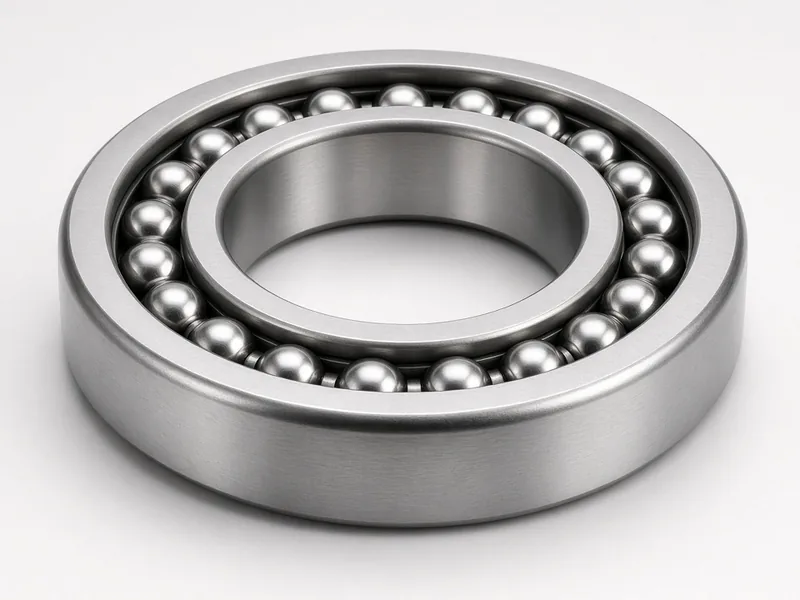
A self-aligning ball bearing has two rows of balls and a common sphered raceway in the outer ring. The inner ring, balls and cage can swivel inside the outer ring, so the bearing adjusts itself to angular misalignment caused by mounting errors, housing tolerances or shaft deflection, typically a few degrees for standard designs.
Because the balls keep a low-friction point contact, self-aligning ball bearings run cooler and at higher speeds than many other self-aligning designs. They suit long or slender shafts, machines where the two bearing positions sit in separate housings, and light to moderate loads, for example in fans, conveyors, agricultural and textile machinery. Versions with a tapered bore can be mounted on an adapter sleeve for easy fitting on plain shafts.
Send us the designation of your existing bearing, or its bore, outside diameter and width, and we will quote the right self-aligning bearing.
Typical applications
- Industrial fans & blowers
- Belt conveyors
- Agricultural machinery
- Textile & woodworking machines
- Long transmission shafts
- Simple gearboxes & pulleys
- Paper & printing machines
Key features & benefits
- Compensates static and dynamic misalignment
- Low friction and low operating temperature
- Suitable for high speeds
- Tapered-bore versions for adapter-sleeve mounting
- Reduces edge loading and premature wear
- German-standard quality
Available series
Scope and sizes: [confirm scope: self-aligning ball bearings only (e.g. 12xx/13xx/22xx/23xx) or also spherical roller bearings; confirm stocked sizes]
How to order
- Send the part number, dimensions or a drawing, plus the quantity you need.
- Our team checks availability and suitable equivalents for your application.
- You receive a quotation with price and delivery time (typically 7–30 days).